

It Was Never About Immigration: The Question of Force America Refuses to Answer
We tend to think of fundamentalism as a religious phenomenon—the domain of zealots, extremists, people who take ancient texts too literally. But fundamentalism is not about religion. It is about closed narrative.And right now, America is building two of them. When you can no longer see the person—when the immigrant is only “invader” or only “victim,” when the officer is only “fascist” or only “hero,” when your neighbor is only “red” or “blue”—you have crossed into fundamentalism. You are no longer in a political disagreement. You are in a religious war. And religious wars do not end through policy. They end through exhaustion, separation, or violence. This article explores the current narratives surrounding ICE and immigration—and the troubling reality that they may not be resolving the real problem, but making it worse.
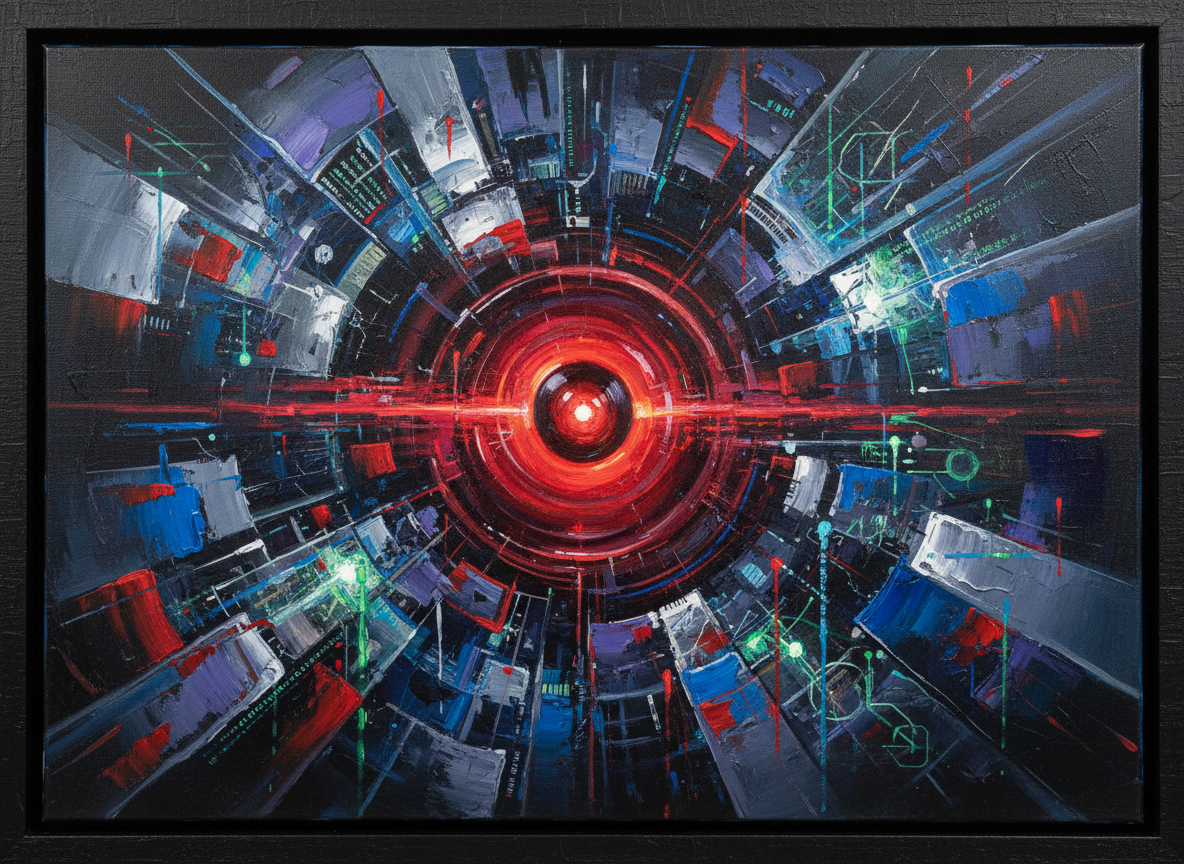
Oh Look, I Invented HAL, But Killed the Crew. Oops—Here’s My Podcast:
The Invention of Clawdbot. I Mean Moltbot. I Mean OpenClaw. I Mean… Whatever.
Ten days. That’s how long it took to build the viral AI agent assistant Clawdbot. Ten days to create an AI agent with root access to your entire digital life, wrap it in a cute lobster mascot, and release it to a public that has no idea what they’re installing.
From the creator’s own mouth: “I spent an hour piecing together some very rough code. It sent a message on WhatsApp, forwarded it to Claude Code, and then sent the result back. Essentially, it was just ‘gluing’ a few things together. To be honest, it wasn’t difficult, but it worked quite well.”
And now we’re supposed to be impressed? This article explores the history of rushing technology before thinking thru security from radio to agentic AI and the recent controversy over OpenClaw/Clawdbot and its massive flaws. I mean it wasn’t meant for non-technical users… so why is everyone using it?

What Gertrude Stein Taught Me About AI
We don’t often think of poets as scientists, but Gertrude Stein was—she spent her career testing how rhythm and repetition generate meaning. This paper begins with a strange discovery: AI systems, when explaining processes like empathy or listening, consistently produce crystalline statements following an ancient rhetorical structure called anadiplosis—chains like “What you attend to shapes what you perceive. What you perceive shapes what you remember. What you remember shapes who you become.” These aren’t hard-coded; they emerge naturally, and they lock into memory in ways flat prose doesn’t. This article traces a line from Stein’s experiments through these AI “jewels” to a practical question: why does AI long-term memory drift? The answer may be what poets knew all along—structure, not content, is what survives. I propose Shape-First Memory: storing the shape of reasoning rather than fragments, allowing AI to reconstruct meaning without drift.
Latest Posts



Featured Music of the Week
Ren Gill is a Welsh singer-songwriter, rapper, producer, and filmmaker who has quietly become one of the most ambitious storytellers working in music today. After being signed to Sony Records in 2010, he was dropped when a mysterious illness derailed his career—later diagnosed as Lyme disease after years of misdiagnosis. Bedridden and abandoned by the industry, Ren began rebuilding from nothing, busking on the streets of Brighton and self-releasing music that caught fire through sheer word of mouth and the loyalty of his fanbase.
His 2022 track “Hi Ren”—a raw, nine-minute dialogue with his own inner demons—went viral, amassing millions of views and introducing the world to his singular blend of hip-hop, rock, spoken word, and theatrical performance. His 2023 album Sick Boi hit number one on the UK charts, beating out Rick Astley, Drake, and Troye Sivan—all without a major label.
The Money Game Trilogy (2019–2023) stands as one of Ren’s defining works. Part 1 sets the emotional landscape of a world ruled by greed and political division. Part 2 delivers a satirical economics lesson disguised as a nursery rhyme, using the “she sells seashells” hook to diagram how scarcity is manufactured and morality discarded—”Swallow all your morals, they’re a poor man’s quality.” Part 3 tells the story of Jimmy, a prodigy whose relentless pursuit of success leads to wealth, paralysis, and ultimately suicide at 45. The trilogy is a unified critique of capitalism, systemic corruption, and the human cost of playing the game.
The Tales Series represents Ren’s other major narrative project—interconnected tragedies told through sparse acoustic guitar and devastating storytelling. Jenny’s Tale (2019) follows a 14-year-old girl murdered during a mugging. Screech’s Tale (2019) reveals her killer’s perspective and his death at the hands of police. Violet’s Tale (2022) rewinds to 2005 to reveal the heartbreaking origin. This month we see the release of new parts to Vincent’s Tale.
Ren doesn’t just make music. He constructs worlds, asks uncomfortable questions, and refuses to look away from the wreckage. Whether through the systemic critique of the Money Game or the cyclical tragedy of the Tales, his work functions as social commentary, theatrical performance, and literary storytelling fused into something entirely his own.
Links:
- Website:thevaultofren.com
- YouTube
- Soundcloud: soundcloud.com/renmakesmusic
Featured Music of the Week seeks to highlight artists who do something meaningful with music—composers, musicians, and creators who use their craft to move people, tell stories, and leave a mark.
 MODERN LIT